Tandem Exchange
A few years back, my brother was living in Berlin and learning German. After trying a bunch of different language learning tools and systems, he found that while traditional approaches like textbooks and tools like Rosetta Stone are good for beginners, they fall short for serious learners who want to become fluent. He did more research and discovered that once you’ve mastered some core vocabulary and grammatical skills, then the following strategies were the most effective:
- Reading books written in the given language.
- Making an effort to think and write in that language.
- Forming a tandem partnership with a native or fluent speaker(s).
Some of these might seem obvious, but many learners don’t realize where to go after the basics — in part because the big players in the industry focus on the technical parts of a language, which are far easier to package into online classes than conversational skills.
Of those three, the first two can be approached without any software or service. However, the third might be tougher if you aren’t outgoing or don’t have any friends who are fluent in the language you’re learning. Even if you do, what’s the incentive for them to spend their time stumbling through conversations with you?
This is why he decided to start Tandem Exchange. The idea of a tandem partnership has been around for some years. In a nutshell, it means you find a partner who not only can converse with you in the language that you’re learning, but also wants to learn a language that you can teach. This setup incentivizes both parties to spend their time teaching one another. Once you find a good match, you can schedule one or two meetings a week and spend half the time speaking one language and half the time on the other.
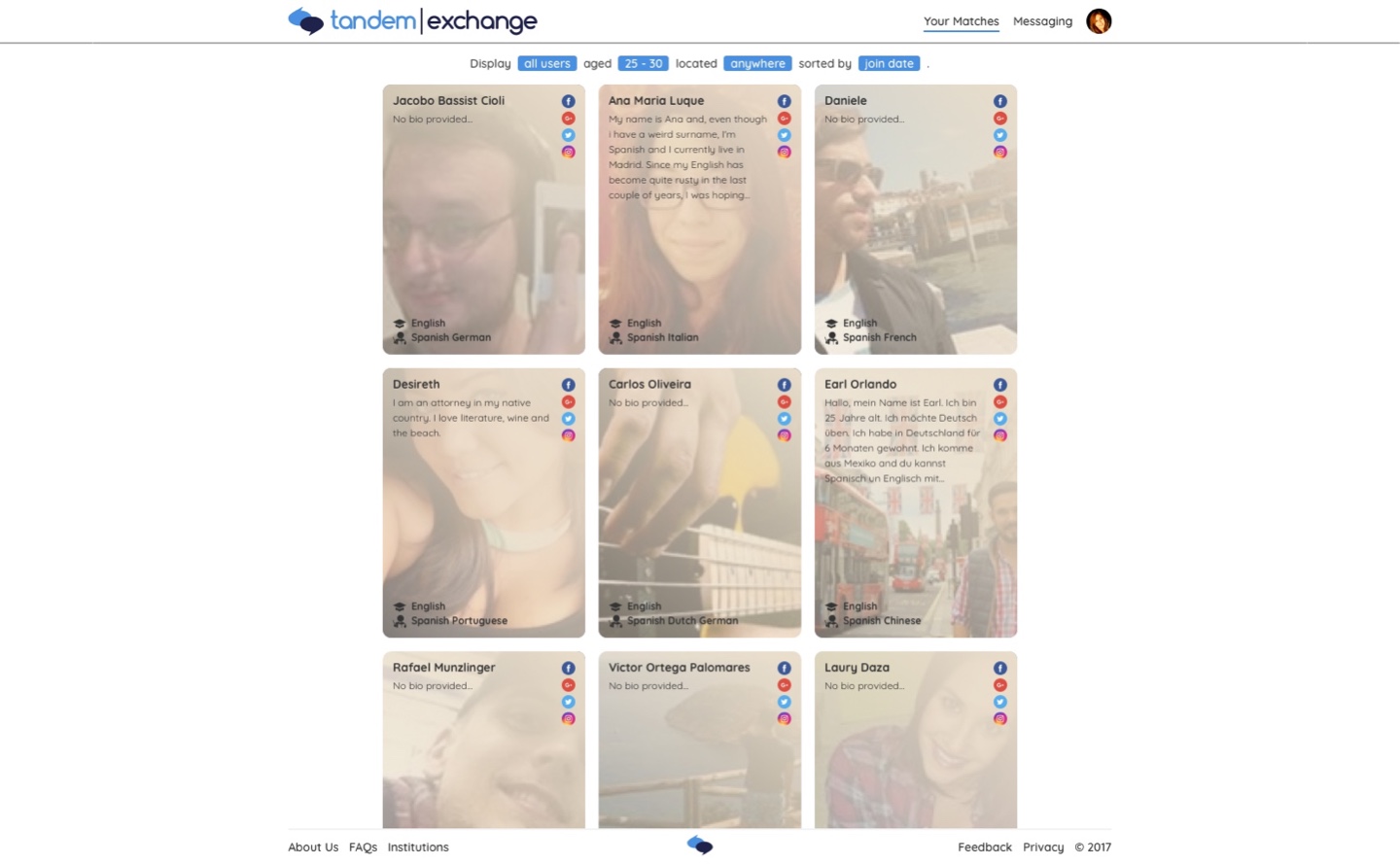
So he spec’d out the requirements and partnered with a developer to build it out. People signed up and it caught some traction but the developer moved on and my brother moved back to the states. Through some other contractors he was able to keep the service up but with no one consistently maintaining it, it got buggy and remained somewhat stagnant.
A while back I picked it up myself to give it a facelift and some much-needed tlc. It was another side project, but with a lot of late nights we shipped a new version and tried to grow a steady userbase while looking for simple ways to monetize it without compromising the core goals.
It never quite found that footing, though, and we eventually took it down, leaving a note for the folks who’d signed up. A good run — and a reminder that building the thing is only ever half the battle.